Deciding on a new water heater for your Phoenix home might seem simple at first. Just pick one and go, right? But there’s more to it when you consider factors like energy bills, space in your home, and how much hot water your family actually needs. With tankless and traditional water heaters offering different pros and cons, it helps to get a clear picture of what each can do for you before making the leap. Let’s break down the key points so you can feel confident choosing the best fit for your household and budget.
In Phoenix’s hot, arid climate, tankless water heaters offer greater energy efficiency and endless hot water on demand, making them an excellent choice for many households. However, traditional tank water heaters often have lower upfront costs and can be sufficient for homes with moderate hot water needs. Our team at AZ’s Best Pipe Doctor Plumbing, LLC can help evaluate your specific situation to recommend the best option.
Energy Efficiency of Tankless and Traditional Units
Tankless water heaters, sometimes called on-demand heaters, stand apart because they activate only when you need hot water. No energy is wasted keeping a reservoir heated constantly throughout the day. The U.S. Department of Energy estimates that for households using less than 41 gallons of hot water daily, tankless systems can be 24 to 34 percent more energy efficient than their traditional counterparts.
Traditional water heaters rely on a storage tank that keeps water heated continuously, ready at a moment’s notice but at the price of standby heat loss. Even when no one’s using hot water, energy is still consumed maintaining that temperature inside the tank. In Phoenix’s warm climate, where residents juggle electricity use for air conditioning alongside household needs, these efficiency differences can be meaningful.
Families with high hot-water demands often see noticeable results. A Phoenix household with several members may run multiple showers, laundry loads, and dishwashers daily. A tankless system’s ability to provide continuous hot water without reheating stored reserves means it wastes less energy overall, contributing to potential savings on annual utility bills. Traditional tanks sometimes deplete faster than expected during heavy usage periods, forcing cold spells between cycles, a real drawback for busy families during early mornings or evening routines.
If you’re thinking about upgrading your home’s hot water system, consulting with our team at AZ’s Best Pipe Doctor Plumbing, LLC can provide tailored advice. Our decades of hands-on plumbing knowledge help ensure that your choice matches your family’s habits and budget while maximizing efficiency and safety for years to come.
Initial and Long-Term Costs
The initial installation cost often grabs attention right away. Tankless units carry a higher sticker price starts at $4000-$6500. The process might require updating gas lines, upgrading electrical outlets, or adding ventilation that meets code, all of which add labor and material costs.
Traditional water heaters begin much cheaper, typically ranging from $1800 to $3700 installed. Installation is often straightforward, simply replacing an old tank with a similar model. However, this simplicity can come at the cost of longevity and efficiency down the line.
Do Tankless Water Heaters Save Money Over Time?
Tankless water heaters have an average lifespan exceeding 20 years thanks to their on-demand design, which conserves energy and reduces wear. The longevity and efficiency of these units save dollars and frustration from repeat replacements. Our team at AZ’s Best Pipe Doctor Plumbing, LLC has installed countless systems across Phoenix homes, and that track record reinforces why lifespan is a factor worth weighing heavily.
Traditional water heaters might win on early cost but their efficiency lags behind. They continuously heat stored water even when it’s not being used, and key parts wear out within 10 to 15 years. Their energy savings over baseline are more modest, meaning you could spend more on energy and replacement tanks over time.
Comparing the two side by side, tankless units carry an initial cost of $4000-$6500 with an average lifespan of around 10 years and greater annual energy savings. Traditional units come in at $1800 to $3700 initially with an average lifespan of 6 to 10 years and more moderate savings due to ongoing standby heat loss.
Which Water Heater Provides Better Performance and Capacity?
The key question is how reliably and continuously your water heater can supply hot water during peak demand. In Phoenix households where families juggle multiple water needs at once, a consistent hot water supply is a necessity.
Tankless water heaters heat water on demand, so you won’t wait for a tank to refill or worry about running out mid-shower. Many models can comfortably handle simultaneous uses without temperature drops. Traditional storage tank units preheat water and hold it ready, but their finite capacity limits peak performance. An average 50-gallon tank might meet everyday needs, but when several family members use hot water at once or appliances kick on simultaneously, the supply can be depleted quickly, leaving you waiting through a reheat cycle.
If your household regularly demands high-volume hot water at the same time, a properly sized tankless system ensures uninterrupted performance. Look for models with higher flow rates rated in gallons per minute (GPM) and consider professional sizing assessments like those our team at AZ’s Best Pipe Doctor Plumbing, LLC provides. If your usage is moderate or staggered, a traditional tank may serve comfortably with proper maintenance.
Maintenance Requirements and Lifespan
Understanding specific maintenance demands can save you from unexpected breakdowns and costly repairs. Tankless water heaters are not maintenance-free. Due to Phoenix’s famously hard water, mineral deposits build up inside heating elements, reducing performance over time. An annual descaling or flushing process is essential, running a vinegar or descaling solution through the unit to dissolve accumulated minerals. Neglecting this step can cause the system to lose efficiency or fail prematurely.
Traditional tank-style heaters also demand annual flushing to clear sediment that settles at the bottom. Mineral buildup can be pronounced, leading to rusting or corrosion that shortens the tank’s life. Sediment layers also act as insulation, forcing the heater to use more energy to heat water through debris rather than the metal tank walls.
On average, traditional water heaters last 6 to 10 years before needing replacement, closely tied to their susceptibility to corrosion. Tankless models frequently exceed 20 years because they avoid holding large volumes of constantly heated water, which is a major source of wear and tear.
Our team at AZ’s Best Pipe Doctor Plumbing, LLC understands local hard water challenges and provides tailored maintenance plans to keep your system running smoothly. Scheduling regular professional inspections helps spot early signs of scaling or corrosion before they become expensive headaches.
Space Considerations and Aesthetic Impact
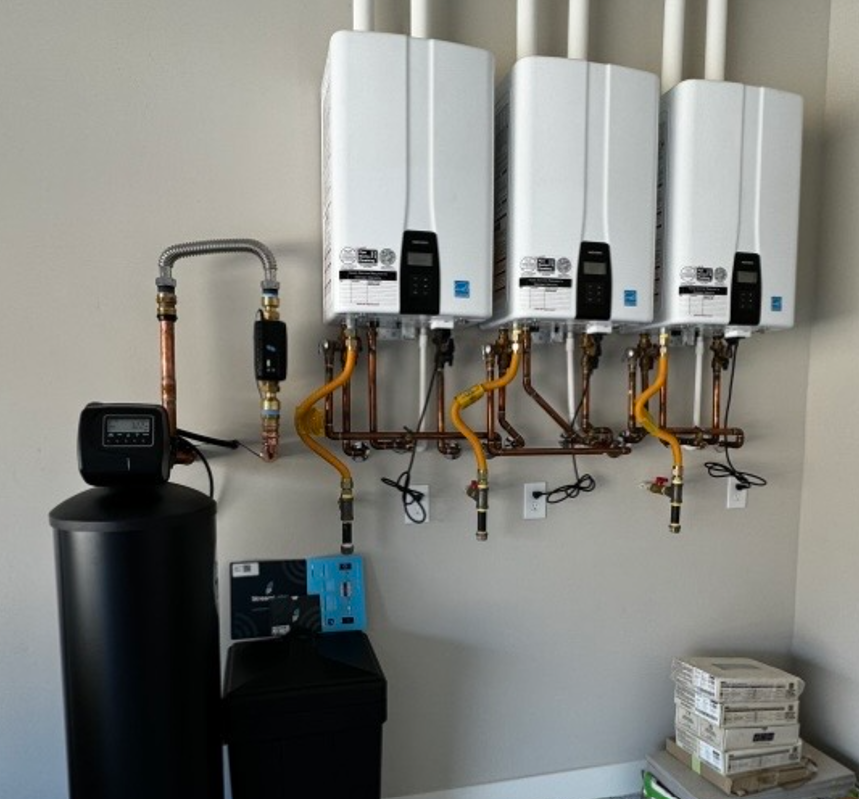
Tankless water heaters are designed with compactness in mind. They mount directly on a wall, freeing floor space that would otherwise be occupied by a bulky tank demanding a dedicated corner in a laundry room, garage, or utility closet. In Phoenix homes where open-plan living and efficient use of space are highly valued, this compact design lets you reclaim precious square footage.
The sleek profile of tankless models, often no larger than a small suitcase hung vertically, slips onto walls indoors or even outdoors under protective coverings. Today’s units blend functionality with modern design cues, sporting clean lines and neutral colors that harmonize with contemporary home decor. They’re easier to conceal behind cabinets or decorative panels, creating a seamless look.
Traditional tanks dominate rooms with their bulky presence and not every Phoenix home has a dedicated utility closet to hide them. For households where the water heater shares space with daily-use areas, tankless systems alleviate this concern by combining form with function.
“A sleek tankless unit doesn’t just save space; it respects your home’s design,” says Christopher Rusnell II of AZ’s Best Pipe Doctor Plumbing, LLC. “It’s an easy upgrade for homeowners who want efficient hot water without sacrificing aesthetics.”
Which Water Heater Is Best for Phoenix Homes?
Living in Phoenix shapes how your water heating system performs. Warmer ground and ambient temperatures mean less energy is needed to raise cold water to comfortable levels, giving both systems an efficiency edge compared to colder regions.
The real complexity comes from Phoenix’s notoriously hard water. High mineral content accumulates inside pipes and heating elements, gradually reducing performance. Traditional tank heaters allow minerals to settle slowly at the bottom, while tankless units push water through narrower heat exchangers where scale buildup may occur faster without proper maintenance.
Beyond maintenance, weigh energy savings against upfront costs and potential repairs. Tankless systems cost more initially but deliver on-demand hot water without standby losses. Traditional heaters come with lower installation prices and simpler technology many find reliable and familiar.
Consider your household size, daily hot water usage, and access to professional maintenance services like those we offer at AZ’s Best Pipe Doctor Plumbing, LLC. Also factor in how each system interacts with your existing plumbing infrastructure, including old versus new pipes, space constraints, or outdoor setups like pool heaters that require connections. Planning ahead means avoiding costly surprises.
Tankless vs Traditional Water Heater: Which Should You Choose?
Tankless water heaters avoid standby heat loss, delivering meaningful utility bill savings over time. They provide a virtually unlimited supply of hot water, occupy far less space, and typically last 20 or more years. However, they carry higher upfront costs and require regular descaling in Phoenix’s hard water conditions.
Traditional water heaters offer straightforward installation and lower initial expenses. Their technology is familiar and doesn’t require the same level of scaling prevention. But their larger footprint demands more space, they come with finite hot water capacity, and long-term costs tend to exceed tankless options due to standby heat loss and more frequent part replacements within their 10 year lifespan.
Understanding these nuances allows Phoenix residents to make savvy choices that balance cost, convenience, and longevity. If you’re uncertain about what fits your home’s unique circumstances, AZ’s Best Pipe Doctor Plumbing, LLC has been helping Arizonans with trusted advice and dependable service. You can reach out any weekday between 8 am and 4 pm for personalized recommendations tailored to your property.
Upgrade to the Right Water Heater for Your Home
Choosing between tankless and traditional water heaters is not just about cost – it is about long-term comfort, efficiency, and reliability.
AZ’s Best Pipe Doctor Plumbing, LLC helps you make the right decision with:
- Expert system recommendations based on your usage
- Professional installation for both tank and tankless units
- Ongoing maintenance to maximize lifespan and efficiency
Call 623-869-6436 today or schedule a consultation online to find the perfect water heater for your Phoenix home.
FAQs on Tankless vs Traditional Water Heater in Phoenix
Is a tankless water heater worth it in Phoenix?
Yes, tankless water heaters are often worth it in Phoenix due to their energy efficiency and ability to provide endless hot water. However, proper maintenance is essential because of hard water conditions.
Can I replace my traditional water heater with a tankless system?
Yes, but it may require upgrades to gas lines, electrical systems, or ventilation. A professional inspection ensures compatibility and proper installation.
Do tankless water heaters increase home value?
Yes, many homebuyers see tankless systems as a premium upgrade due to energy efficiency, longer lifespan, and modern design.
What size tankless water heater do I need?
The right size depends on your household’s hot water demand, measured in gallons per minute (GPM). Larger families typically need higher-capacity systems.
Which water heater is better for hard water in Phoenix?
Both systems are affected by hard water, but tankless units require more consistent descaling. With proper maintenance, both can perform efficiently.
Can a tankless water heater handle multiple showers at once?
Yes, but it depends on the unit’s flow rate (GPM). Larger or properly sized tankless systems can handle multiple showers and appliances simultaneously without running out of hot water.
How much can I save on energy bills with a tankless water heater?
Savings vary by usage, but many homeowners see up to 20 to 30 percent reduction in energy costs due to the elimination of standby heat loss.
Are tankless water heaters good for large families?
Yes, tankless systems are ideal for large families because they provide continuous hot water. However, proper sizing is essential to meet high demand.
Do traditional water heaters run out of hot water quickly?
They can, especially during peak usage. Once the tank is empty, you have to wait for it to refill and reheat, which can take time.
Is installation more complicated for tankless water heaters?
Yes, tankless installation can be more complex. It may require upgrades to gas lines, electrical systems, or ventilation, depending on your home setup.
Can tankless water heaters be installed outdoors in Phoenix?
Yes, many tankless systems are designed for outdoor installation, which is ideal for Phoenix’s warm climate and helps save indoor space.
What happens if a tankless water heater is not maintained properly?
Lack of maintenance can lead to mineral buildup, reduced efficiency, and eventual system failure, especially in areas with hard water like Phoenix.
Are traditional water heaters easier to repair?
Generally, yes. Traditional systems have simpler components, making repairs more straightforward and often less expensive.
How long does it take to install a new water heater?
A traditional water heater can often be installed in a few hours, while tankless installations may take longer due to additional setup requirements.
Do tankless water heaters provide instant hot water?
Not exactly. They heat water instantly, but you may still experience a slight delay depending on the distance between the heater and the faucet.
Which type of water heater is more environmentally friendly?
Tankless water heaters are generally more eco-friendly due to higher energy efficiency and reduced energy waste.
Can hard water damage both types of water heaters?
Yes, hard water affects both systems. It causes sediment buildup in traditional tanks and scaling in tankless units, making regular maintenance essential.